Your facility needs consistent cleaning schedules tailored to specific risks, processing volumes, allergen management, and regulatory visits, with verifiable documentation validating HACCP requirements, inspection compliance, and public health regulations. The details below provide details about essential cleaning protocols.
Main Points
- Brampton's sanitation technicians support restaurants, grocery departments, commissaries, warehouses, bakeries, schools, mobile vendors, and allergen-sensitive operations.
- They clean frequently contacted areas, food-contact equipment, kitchens, floors, drains, restrooms, and storage areas using sectional methods to avoid cross-contamination.
- Checking of proper chemical concentration, suitability, and exposure duration is conducted by qualified providers, with finalization logged using swabs, assessments, and remedial documentation.
- Sound maintenance calendars consider hazard, production rate, switches, releases, and regulations when allocating regular, periodic, and seasonal operations by area.
- Insurance, color-categorized tools, HACCP, sanitation competency, safety training training, testimonials, and inspection-ready sanitation documentation are critical vendor qualifications.
Brampton Operations That Need Food Safety Cleaning: Which Ones?
Food safety cleaning is essential for any Brampton facility that handles, maintains, prepares, packages, or offers food. Apply it to your establishment if it meets the criteria for public health inspection, food premises regulations, or internal HACCP-based controls. This includes dining establishments, break rooms, distribution centers, market departments, meat shops, fish areas, stores, and food prep kitchens.
You'll additionally need documented food sanitation in supply facilities, manufacturing operations, cold storage warehouses, bakeries, school food programs, reception halls, and delivery services. Portable business models matter as well, like food trucks, festival vendors, and pop-up establishments. When your workers work with ingredients, section ready-to-serve foods, heat meals, or keep allergens stored, your venue requires documented cleaning protocols. In Brampton, hygiene continues to be necessary; it constitutes lawful, operational, and customer protection standards.
What Services Do Brampton Cleaning Experts Provide?
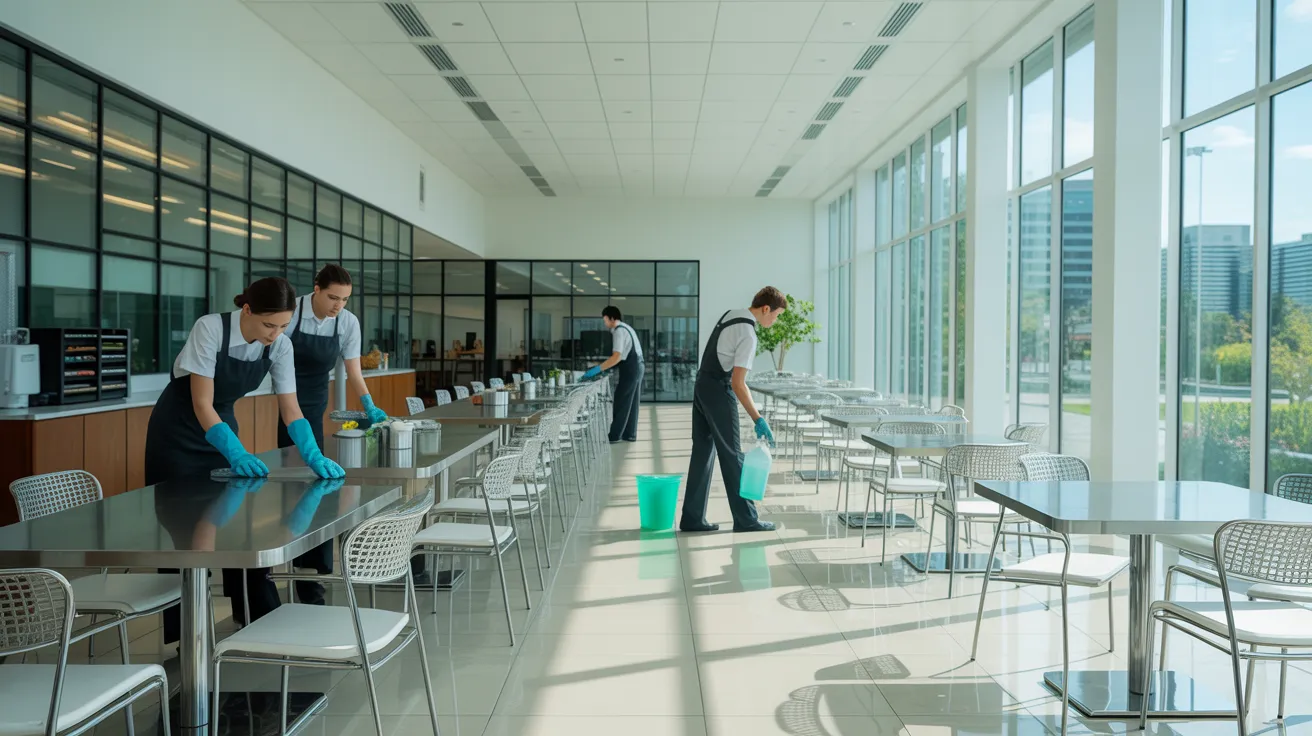
Your facility requires professional cleaners who sanitize all high-touch areas, cooking and food prep areas, floors, and toilet facilities for food safety and health code adherence. These zones receive attention because they represent the most significant contamination risk, trip and slip dangers, and violations of hygiene standards.
When you understand what they clean, you can verify that your facility's cleaning scope meets operational and regulatory requirements.
Essential High-Touch Surface Disinfection
Sanitation in Brampton providers underscore high-touch surface sterilization due to the risk of microbes and residue transmitting across the location. You must have a written protocol for sanitizing all high-touch items including handles, plates, switches, railings, control surfaces, POS systems, and refrigeration equipment. Employing touchpoint mapping, professionals determine every high-traffic zone and determine cleaning frequency
confirm that disinfection is successful and document follow-up measures when results come exceed required standards
Kitchen Areas, Floor Surfaces, and Bathroom Spaces
Expect Brampton cleaning experts to focus on kitchens, floors, and restrooms because each area carries unique food safety, accident prevention, and public health risks. In industrial kitchens, you need degreasing on cook lines, equipment exteriors, drains, prep surfaces, and splash zones to minimize bacterial growth and pest activity.
You should also expect documented floor care. is likewise provided as part of the service.
Restroom cleaning requires disinfecting touch areas, bathroom equipment, stall barriers, supply stations, and bins, replacing items and managing smells. They also maintain restaurant cleaning supply rooms where product storage, sink cleanliness, and drain systems impact daily sanitation standards and worker protection.
Why Food Safety Cleaning Matters in Brampton
Brampton operations require food-safe cleaning standards to meet compliance obligations and pass audits. You also reduce cross-contamination by cleaning and sanitizing food-contact surfaces, equipment, and high-touch areas correctly. Most importantly, you help protect community wellness by reducing the chance of food poisoning in your establishment.
Sanitary Standards Adherence
Food businesses in Brampton face strict public health standards, making food safety cleaning essential to meeting health code requirements, defending patrons, and avoiding enforcement action. You must maintain hygienic food handling zones, documented cleaning schedules, safe chemical management, and traceable training practices that correspond to municipal and provincial inspection expectations.
When inspectors assess your operation, they determine whether your cleaning program supports proper stock preservation, tool sterilization, trash control, and facility cleanliness.
Cross-Contamination Prevention
Following regulatory requirements depends on your ability to prevent cross-contamination in routine food work and sanitation. You should isolate raw items from prepared foods, sanitize prep surfaces between tasks, and maintain separation of cleaning products from food. Clear procedures reduce transfer risks and support consistent compliance during inspections.
You could implement allergen segregation to stop main allergens from reaching common areas, containers, or machinery. Apply separate boards, color-marked equipment, and strict utensil labeling so staff don't mix items throughout cooking or delivery. Mandate handwashing after handling uncooked meat, fish, egg products, or allergens. Change wiping cloths regularly, and check sanitizer strength with test strips. When you train staff to follow these controls every shift, you develop a more sanitary, secure business that matches Brampton's safety requirements daily.
Public Health Safeguarding
When sanitation efforts weaken, you don't only face inspection setbacks—you expand the chance of food contamination affecting customers, staff, and the larger Brampton community. You also weaken your role in safeguarding community wellness, especially in high-traffic food premises where contamination can spread quickly through surfaces, equipment, and touchpoints.
You must implement sanitation protocols that eliminate contaminants, effectively sanitize, and ensure effectiveness. This entails adhering to contact periods, utilizing authorized sanitizers, see information on this maintaining records, and coaching staff to fulfill compliance standards. These actions support pathogen control by reducing microbes before affecting food surfaces or hands. In Brampton, effective cleaning shields vulnerable populations, minimizes disease spread, and proves your diligence. When you adhere to proper protocols, you exceed requirements—you meaningfully lower danger and advance safer food handling across the region.
Why Is Cleaning Essential for Food Safety Compliance?
Maintaining comprehensive cleaning schedules supports food safety compliance by lowering contamination exposure, controlling pathogen growth, and keeping your facility compliant with sanitation requirements under HACCP-based programs and public health regulations. You validate that food-handling surfaces are visibly clean and microbiologically controlled, enabling documented preventive controls and inspection readiness.
Effective cleaning also reinforces allergen mitigation by extracting residues that can lead to undeclared allergen exposure. by clearing residues that can lead to undeclared allergen exposure.
What's the Ideal Time to Arrange Commercial Cleaning?
Plans for cleaning perform best when established based on risk, production volume, and regulatory requirements instead of just a fixed calendar.
facility closures, weather-driven soil buildup, or periods of high pest concerns.
Selecting the Right Brampton Cleaning Experts: Key Considerations
Begin by evaluating providers based on sanitation compliance standards—not solely on price alone. You should confirm that each organization comprehends CFIA, public health, and HACCP-aligned expectations applicable to your facility. Request proof of insurance, WHMIS compliance, staff training documentation, and oversight procedures. Assess whether technicians recognize cross-contamination hazards, chemical handling protocols, and verifiable sanitation records.
You should further examine service consistency and accountability. Request references from food facilities in Brampton, then review response times, corrective action plans, and communication protocols. Validate the company facilitates supplier audits and can present inspection-ready documentation to authorities or external parties. Confirm equipment receives maintenance, colour-coded tools are applied correctly, and facility-specific risks are recognized. A experienced service protects compliance, product quality, and your brand reputation.
What does a cleaning and sanitation plan encompass?
Document a framework that outlines every sanitation activity, guideline, and role before production begins. You should include cleaning schedules, approved products, ratios, contact periods, tools, and validation approaches for each area, surface, and device. Remember to add pre-operational inspections, corrective actions, and employee training requirements.
Your plan should also address cross-contamination controls, waste handling, pest-prevention measures, and documented schedules for bathrooms, drainage systems, surfaces, and food-preparation zones. Explain how you'll separate raw and ready-to-eat processes, enable ingredient tracking, and ensure accurate allergen labeling through validated cleaning between product changes. You should assign accountability, keep signed records, and compare results against regulatory standards, HACCP controls, and customer requirements. When gaps appear, update procedures immediately and re-educate staff.
Commonly Requested Questions
Can sanitation providers accommodate overnight shifts in Brampton properties?
If you operate controlled facilities, you'll also require records that enable audits and ensure quality assurance.
Can sanitation professionals manage hazardous incidents?
Yes, you can expect Brampton cleaning experts who provide emergency spill response services. They manage hazardous materials, assess risks, isolate affected areas, and begin swift cleanup to minimize risk and avoid operational disruption. You should confirm response times, professional credentials, safety procedures, and disposal procedures. If your facility must comply with industry standards, choose a provider that documents incidents, follows compliant standards, and supports audit readiness.
Do plant-based disinfectants work safely on surfaces contacting food?
Yes, green disinfectants can be safe for food preparation areas if you opt for items marked food-safe and meeting regulatory standards. You should verify contact duration, dilution rates, and rinse protocols before use. Many plant-derived products minimize toxic chemical contact, but you require proof of efficacy against specific pathogens. To maintain residue free surfaces, you should adhere to manufacturer directions precisely and verify the cleaning agent adheres to food sanitation requirements.
Do cleaning schedules permit production fluctuations?
Certainly, sanitation programs accommodate seasonal variations readily. Adapt timing, staff levels, cleaning agents, and verification steps to fit with operational cycles while maintaining regulatory compliance. Lower equipment downtime by organizing cleaning alongside production shifts, peak seasons, and operational patterns. Additionally modify procedural documents, instruction programs, and environmental monitoring to address periodic risks, additional allergens, or elevated soil levels. Regular reviews ensure the plan effective.
Will commercial cleaners teach your staff on sanitation best practices?
Indeed, commercial cleaning providers typically provide staff training on sanitation best practices. Your team receives training on safe chemical application, exposure durations, cross-contamination prevention, equipment breakdown, and record-keeping. They typically follow instruction with HACCP, GMP, and CFIA or local public health requirements. Many also execute sanitation audits to verify compliance, reveal issues, and reinforce corrective actions. This assists you to maintain consistent procedures, pass inspections, and reduce food safety risks each day.
Conclusion
Partnering with Brampton food safety and commercial cleaning experts means more than cleaning—it ensures your facility stays inspection-compliant and your protocols are defensible. From processing facilities to kitchens, each cleaned area and maintained corner lessens contamination risk and prevents major expenses. By arranging service at suitable frequencies and executing a comprehensive cleaning strategy, you protect your workforce, clients, and your reputation. In a heavily regulated sector, clean environments are non-negotiable—they're critical to business success.